Introduction: Ready to Boost Your Credit Score Fast?
Have you ever checked your credit score and felt that sinking feeling—it’s lower than you thought? You’re not alone. Whether you’re planning to buy a home, get a car loan, or simply qualify for better credit card rates, improving your credit score can make all the difference.
The good outcomes is You can raise your credit score fast—sometimes even Boost your credit score in 30 days—by following the right strategies. In this post, we’ll uncover 10 proven ways to give your score a serious boost and get you closer to financial freedom.
check your credit status/Report with FREE legit tools verified by international credit Bureaus:
Request your report from Equifax, Experian, and TransUnion.
Review all accounts for errors, late payments, or unknown inquiries.
By understanding your report, you can take targeted steps to raise your credit score fast and fix mistakes that may drag it down.
3: Dispute Errors: Step-by-Step Process + Free Template
Errors happen more often than you think.
A single mistake could lower your score by 50+ points! if the following steps didnt solve your issue contact us here with Free help.
Here’s how to fix it:
Step-by-Step to Dispute Errors
Identify the incorrect entry on your credit report.
Gather proof (bank statements, receipts, etc.).
Submit a dispute directly with the credit bureau online.
Free Email Template:
Subject: Request to Remove Incorrect Entry from My Credit Report
Dear [Credit Bureau], I recently reviewed my credit report and found an inaccurate item: [describe issue]. Please investigate and remove this error. Attached are supporting documents.
Thank you, [Your Full Name] [Your Address] [Last Four Digits of your SSN]
Disputing incorrect items can significantly increase your credit score in 30 days once corrected.
Use a credit monitoring tool (like Experian, Credit Karma, or SmartCredit) to track your score weekly. Monitoring helps you spot issues early and celebrate your progress.
Conclusion: Your 30-Day Path to a Better Credit Score
Raising your credit score doesn’t have to take years. By applying these 10 proven methods, you can increase your credit score in 30 days—or even sooner.
Remember, the key to success is consistency and awareness. Check your report, manage utilization, and use credit wisely. You’ll be surprised how fast results show up.
Start today and see how quickly you can raise your credit score fast toward your financial goals!
FAQs: Raise Credit Score Fast – Common Questions Answered
1. Can I really increase my credit score in 30 days?
Yes! Paying down balances, correcting report errors, and lowering utilization can show results within a single billing cycle.
2. What’s the fastest way to raise my credit score 100 points?
Combine multiple tactics: pay down debt, remove errors, and use credit-builder tools.
3. Does checking my credit score lower it?
No. Checking your own credit is a soft inquiry and doesn’t affect your score.
4. How often should I check my credit report?
Review it every month, especially if you’re trying to raise your credit score fast.
5. Are credit repair companies worth it?
They can help, but you can often do the same steps yourself for free using the methods above.
Experian review 2025| What is Experian what does Experian do?
our Guide today(Experian review 2025) focus one of the leading in credit business and activities,Experian is one of the three major credit bureaus in the US, alongside TransUnion and Equifax, It offers credit monitoring, score tracking, and identity protection services with different levels of coverage we will explain bit by bit our trending topic Experian review 2025.
Experian is a global data and technology company, powering opportunities for people and businesses around the world, by helping to redefine lending practices, uncover and prevent fraud, simplify healthcare, deliver digital marketing solutions, and gain deeper insights into the automotive market, all using unique combination of data, analytics and software.
They also assist millions of people to realize their financial goals and help them to save time and money.
We operate across a range of markets, from financial services to healthcare, automotive, agrifinance, insurance, and many more industry segments.
I’ve thoroughly examined Experian’s identity protection products with our research team, Apart from being one of the three primary credit bureaus, Experian has become a significant player in the identity protection industry with its IdentityWorks platform.
In this review(Experian review 2025), I will examine Experian’s credit monitoring services, security protocols, and security features. In order to assist you in determining whether its services are cost-effective and whether recent security incidents should sway your decision, I will carry out extensive testing and analysis.
🌟 Experian Overview
⭐ Rating: 4.5 / 5
💰 Price: $24.99/ month
✅ Free Version: Yes with no limits
📱 Platforms: Web, iOS, Android
🔔 Credit Monitoring: Included
🛡️ Insurance: 1$ million +Identity theft insurance
✨ Additional Features: Credit score simulation, alerts, and reporting tools,social security number monitoring
IdentityWorks is now a closed service that can only be accessed with a complementary code. Meanwhile, the IdentityWorks technology appears to have been migrated into the CreditWorks dashboard. So, the normal CreditWorks subscription now includes the full IdentityWorks identity protection technology. For accessibility, I will refer to IdentityWorks and CreditWorks interchangeably throughout this review.
Experian IdentityWorks features
During my testing, IdentityWorks and CreditWorks offered a rich set of features but a few notable limitations. Here’s a closer look at what the service provides:
Experian Identity Protection Features by Plan
Feature
Basic Plan
Premium Plan
Family Plan
Dark Web Monitoring
✔️
✔️
✔️
Real-Time Fraud Alerts
✔️
✔️
✔️
Credit Monitoring (1 Bureau)
✔️
✔️
✔️
Credit Monitoring (3 Bureaus)
❌
✔️
✔️
Identity Theft Insurance ($1M)
✔️
✔️
✔️
Social Security Number Monitoring
❌
✔️
✔️
Bank Account & Credit Card Monitoring
❌
✔️
✔️
Lost Wallet Assistance
❌
✔️
✔️
Child Identity Monitoring
❌
❌
✔️
Daily Credit Score Tracking
❌
✔️
✔️
Customer Support (24/7)
✔️
✔️
✔️
The old pricing model for IdentityWorks was simple: a free plan for basic Experian credit monitoring, a $24.99/month Premium plan for in-depth individual protection, and a $34.99/month Family plan, enough for two adults plus ten children. Each tier adds to features and levels of protection progressively, with paid plans providing critical services like three-bureau monitoring and identity theft insurance. Under the new, combined model, the Family subscription tier has disappeared, and there is only a CreditWorks Basic (free) and CreditWorks Premium option at $24.99/month.
Experian: Pros and Cons
✅ Pros
Free credit reports and scores available
Trusted by millions worldwide
Real-time credit alerts and monitoring
Identity theft protection options
User-friendly website and mobile app
❌ Cons
Some premium features require a subscription
Reports may contain outdated information
Customer service can be hard to reach
Data breaches have occurred in the past
Complex cancellation process for subscriptions
According to my testing, Experian’s biggest pros are its extensive monitoring and credit reporting. With a wide range of identity protection features – especially in paid plans – you can find coverage that suits your needs, including some features like court record monitoring and social network spying.
That said, users should be mindful of the operational challenges, including the complex interface and known customer service challenges. Although the recent platform improvements are promising, the expected premium charges have already raised questions regarding the system’s reliability and whether it might affect the overall user experience. It all boils down to whether you care more about complete monitoring than the interface is simple to use and customer support is a prompt response away.
Our methodology
A thorough review takes more than reading promotional materials or skimming other articles. Our specialists have developed and refined specific testing criteria to examine how Experian IdentityWorks performs in real-world conditions. We focus on five key components of identity theft protection, each weighted according to its importance in keeping you safe.
Protection features (30%). We rigorously test core monitoring capabilities, including three-bureau credit tracking, dark web surveillance, Social Security number monitoring, and financial account protection.
Monitoring and alerts (25%). Our team evaluates alert speed, accuracy, and customization options by tracking how quickly and reliably the service responds to potential threats.
Recovery services (20%). We assess the effectiveness of recovery specialists, examine insurance coverage details, and verify the quality of support for credit freezes and fraud resolution.
User experience (15%). We evaluate platform usability, mobile app functionality, and the accessibility of educational resources through hands-on testing.
Value for money (10%). We analyze pricing structures against feature sets and compare family plan options with competitor offerings to determine true market value.
How much does Experian cost?
Experian Pricing Features Comparison
Feature
Basic Plan
Premium Plan
Family Plan
Free Trial
Free forever (limited features)
7-day free trial for 1 user
7-day trial with child ID monitoring (up to 10 kids)
Monthly Subscription
Free
$24.99/month
$34.99/month
Annual Plan Option
❌
✅
✅
Cancel Anytime
✅
✅
✅
Family Coverage
❌
❌
✅ (up to 10 children)
Daily Credit Reports
❌
❌
✅
Daily FICO Score Updates
❌
✅
✅
Access to Tri-Bureau Credit Data
❌
✅
✅
Premium Support Access
❌
✅
✅
Lost Wallet Assistance
❌
✅
✅
These plans offer strong protection, but it’s important to add that competitors like Aura protect five adults and unlimited children for $30/month. For users prioritizing direct bureau integration and robust monitoring capabilities, Experian is worth the price.
key features of Experian review 2025:
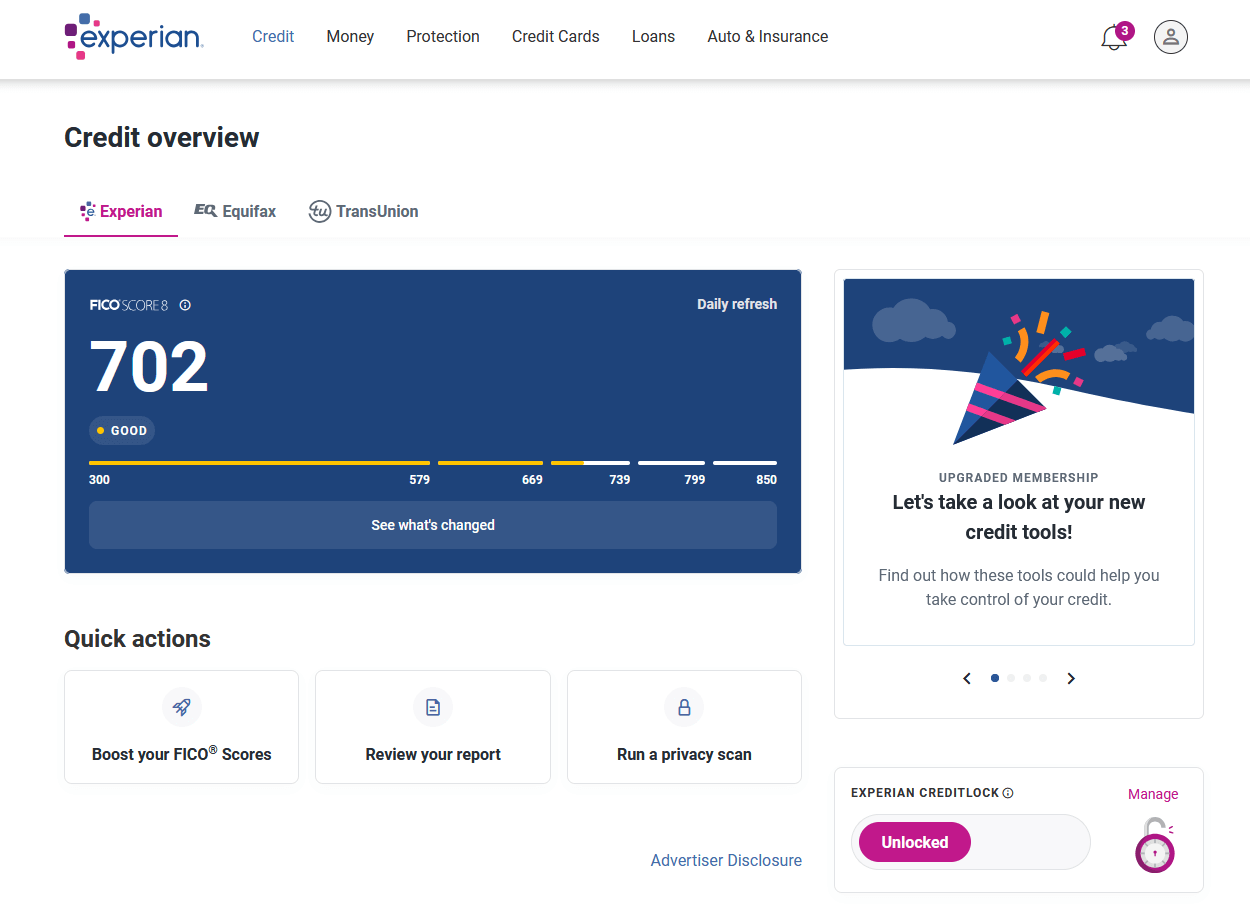
Credit score monitoring: One of the things I liked most about Experian is the chance to get a free credit report. You can check it along with your FICO score without sharing your credit card details.
Credit reports: Experian also helps you keep track of your credit reports. You can opt for a free credit monitoring service, which gives you daily updates of any credit changes or score drops.
Dark web surveillance: Experian also comes with a great range of cybersecurity tools, including Dark Web monitoring, which actively looks for your personal information appearing on the Dark Web and sends real-time alerts. While comprehensive cybersecurity tools are available in paid plans, you can also do a quick Dark Web scan for free.
Credit locking and fraud resolution assistance: Unlike other bureaus, which only offer credit freezing (and it usually takes days to freeze/unfreeze), Experian came up with a neat CreditLock feature. It allows you to prevent unauthorized credit pulls and related activity. Furthermore, you can also set up fraud alerts and receive real-time notifications from a designated fraud resolution agent for further instructions. In worst-case scenarios, Experian keeps you covered with up to $1 million in identity theft insurance.
FICO score simulator: Instead of just checking your credit score, Experian also helps you run simulations to see how you might improve it. I especially liked playing with all the different options and checking how they would reflect on my credit score, and I find this feature to be useful for most consumers.
During my testing, IdentityWorks and CreditWorks offered a rich set of features but a few notable limitations. Here’s a closer look at what the service provides:
Experian Identity Protection Features by Plan
Feature
Basic Plan
Premium Plan
Family Plan
Dark Web Monitoring
✔️
✔️
✔️
Real-Time Fraud Alerts
✔️
✔️
✔️
Credit Monitoring (1 Bureau)
✔️
✔️
✔️
Credit Monitoring (3 Bureaus)
❌
✔️
✔️
Identity Theft Insurance ($1M)
✔️
✔️
✔️
Social Security Number Monitoring
❌
✔️
✔️
Bank Account & Credit Card Monitoring
❌
✔️
✔️
Lost Wallet Assistance
❌
✔️
✔️
Child Identity Monitoring
❌
❌
✔️
Daily Credit Score Tracking
❌
✔️
✔️
Customer Support (24/7)
✔️
✔️
✔️
Experian’s credit monitoring operates through daily scans rather than instant updates, checking for changes across credit files. Premium and Family plan members receive monitoring capabilities that cover all three credit bureaus, while the Basic plan monitors only Experian data. Daily credit reports and FICO scores – on paid plans only – help you track your credit health over time.
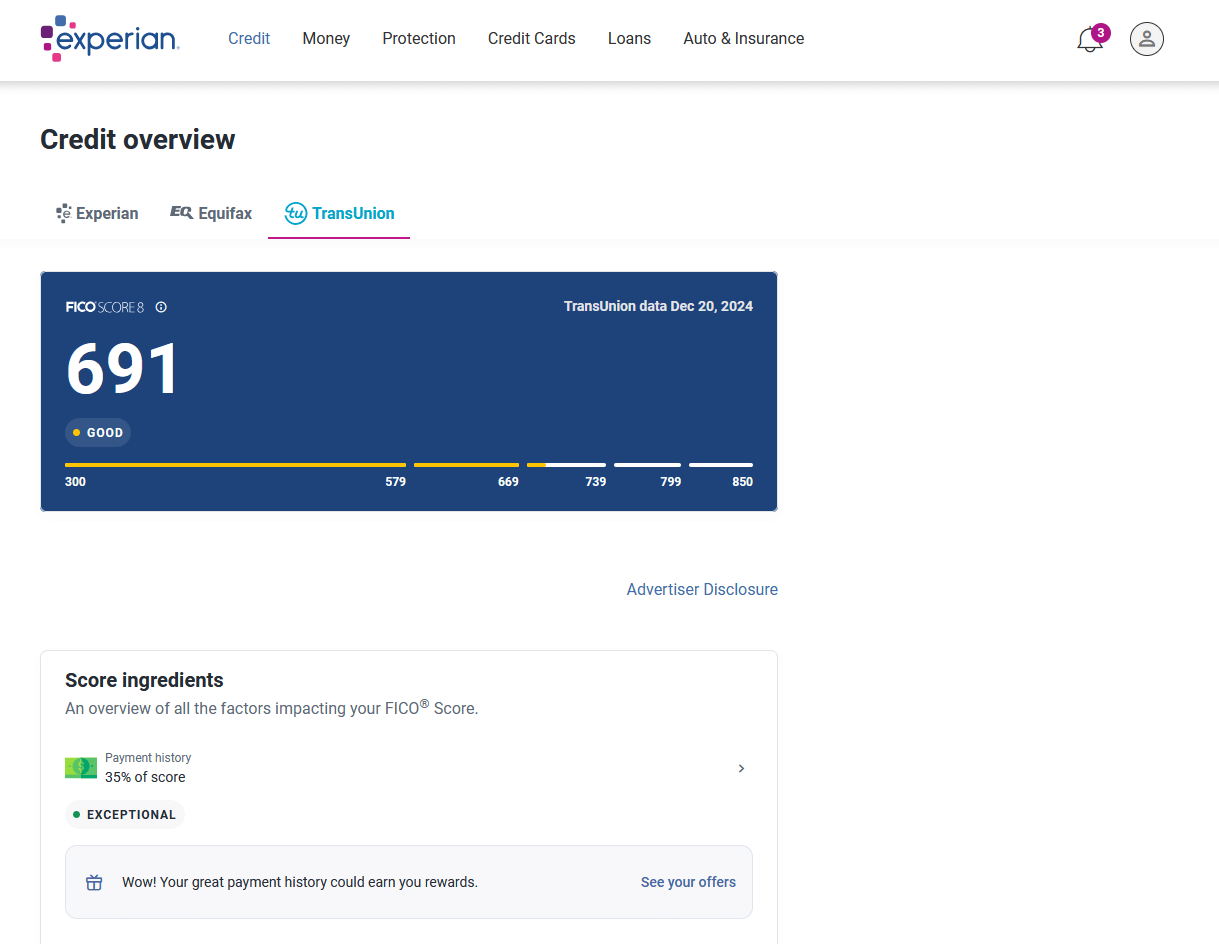
Premium plans give you access to reports from TransUnion.
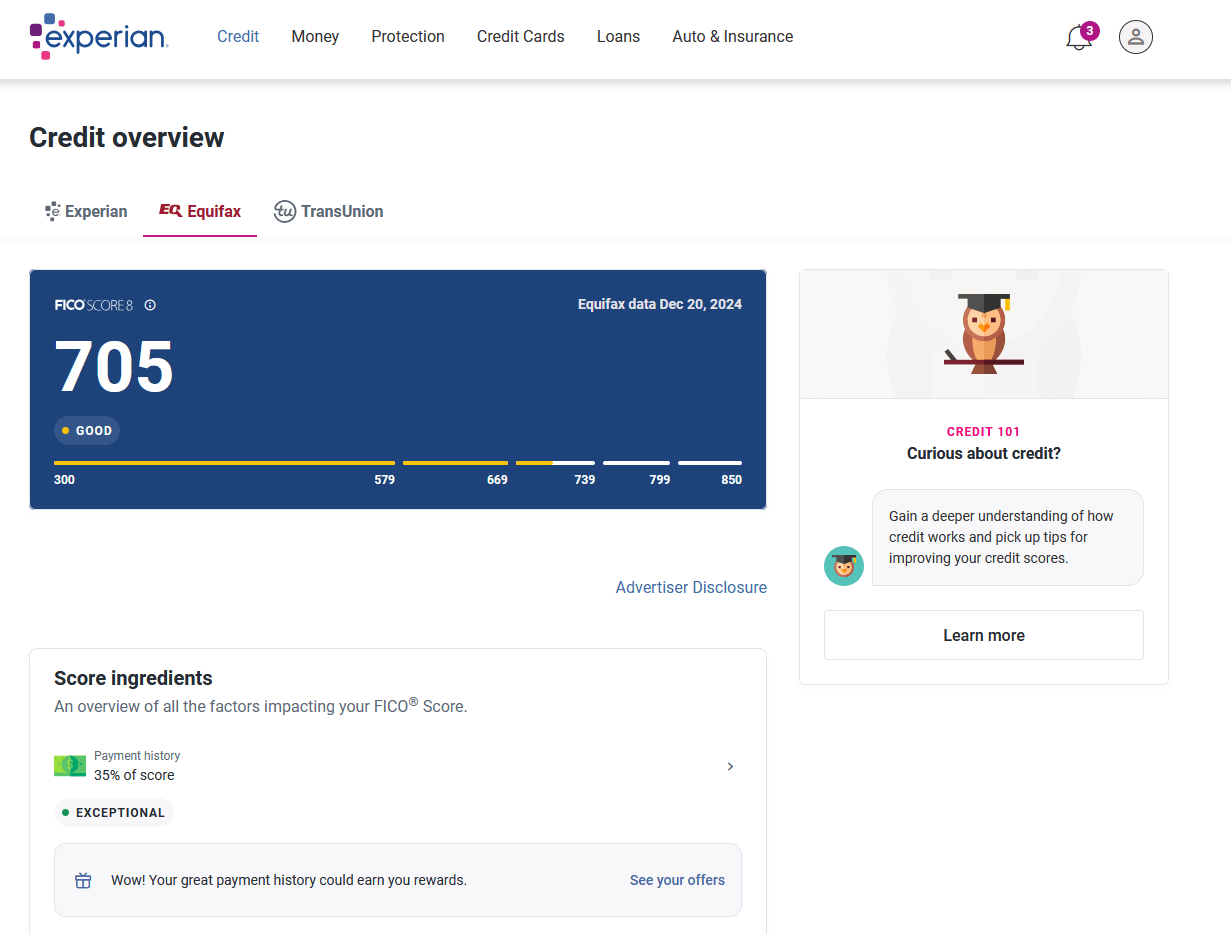
And Equifax as well:
The identity protection suite includes dark web surveillance across 600,000 web pages, though users need to specify which information to monitor.
Experian IdentityWorks Identity Theft Protection Plans and Pricing for 2025
Experian Pricing Features Comparison
Feature
Basic Plan
Premium Plan
Family Plan
Free Trial
Free forever (limited features)
7-day free trial for 1 user
7-day trial with child ID monitoring (up to 10 kids)
Monthly Subscription
Free
$24.99/month
$34.99/month
Annual Plan Option
❌
✅
✅
Cancel Anytime
✅
✅
✅
Family Coverage
❌
❌
✅ (up to 10 children)
Daily Credit Reports
❌
❌
✅
Daily FICO Score Updates
❌
✅
✅
Access to Tri-Bureau Credit Data
❌
✅
✅
Premium Support Access
❌
✅
✅
Lost Wallet Assistance
❌
✅
✅
These plans offer strong protection, but it’s important to add that competitors like Aura protect five adults and unlimited children for $30/month. For users prioritizing direct bureau integration and robust monitoring capabilities, Experian is worth the price.
How does Experian work?
Experian collates information from a number of different sources, including:
Personal information, such as your date of birth, address and whether you are on the electoral roll. Existing credit agreements, including how much of your credit limit you are using (known as “credit utilisation”), your track record of making payments on time and any late or missed payments. Examples of problems with debt include defaults, CCJs, IVAs and bankruptcy. These only appear on your credit report for 6 years before being removed. Experian doesn’t include information about your employment, salary or income, or health expenses. It does, however, look at how often you apply for credit and whether you have been turned down for credit in the past.
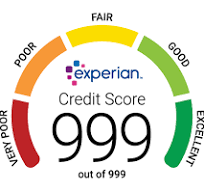
It uses all of this information to come up with a score between 0-999, with 999 being the perfect score. This number gives lenders a guide to your potential creditworthiness, although different lenders will view your score differently rather than there being a one-size-fits-all approach. In short, viewing your Experian credit score, alongside your score with other credit reference agencies, will give you an indication of whether you are likely to be approved for credit, but it doesn’t act as a guarantee.
Experian review ? Free Credit Score Rating
Credit Score Rating Guide
Credit Score Range
Rating
What It Means
961 – 999
Excellent
You’re very likely to be approved for credit at the best rates.
881 – 960
Good
You should be eligible for most credit cards, loans, and mortgages.
721 – 880
Fair
You might get approved, but not at the best interest rates.
561 – 720
Poor
You may struggle to get credit and will likely pay higher rates.
0 – 560
Very Poor
You’re unlikely to be approved for most credit without improvement.
What is the most accurate credit score?
As with other credit reference agencies, Experian uses information collected from official sources and lenders. There is the potential for errors to occur or for out-of-date entries to drag your score down. Experian, Equifax and TransUnion also collect data from different sources, so your report will often vary significantly across all three, including the overall credit score you are given. It is, therefore, worth checking your report with all three providers, correcting any errors and making a note of the overall credit score for each. This is all the more important as you can’t be sure which of the providers’ reports lenders will use when you apply for products in the future. You could, for example, have checked your Experian score, but the lender refers to the Equifax report, which could have a different overall credit rating that makes you less likely to be accepted.
How to ensure accuracy
Dispute errors: If you find errors, file a dispute with the credit bureau to have the information corrected.
Check all three reports: You are entitled to a free credit report from each bureau (Experian, Equifax, and TransUnion) every 12 months at AnnualCreditReport.com.
Review for errors: As you check your reports, look for any inaccuracies, such as incorrect personal information, accounts that don’t belong to you, or wrong payment statuses.
Why Experian may differ from other Credit Agencies(Services)
Reporting schedules: Lenders do not report to all three bureaus at the exact same time, so credit reports can have different information at any given moment.
Data sources: Each bureau may receive information from a different set of creditors, leading to variations in the accounts listed on each report.
Scoring models: While Experian uses a popular model like FICO, different scoring models can weigh factors differently, leading to different scores even with the same data.
Is Experian Safe to Use? What Gen Z Should Know?
In 2014, Experian, alongside Equifax and TransUnion, became regulated by the Financial Conduct Authority. This means it has to comply with certain standards, offering consumers protection.
That said, it received an enforcement notice from the Information Commissioner’s Office (ICO) about the way it has “used personal data within their data broking businesses for direct marketing purposes”. The ICO has ordered it to make changes to “invisible” processing, where individuals are not aware “the organisation is collecting and using their personal data”. Experian is appealing against the ICO ruling.
Is Experian Safe to Use for Credit Reports and Scores?
The short answer: yes, Experian is generally safe—but you still need to stay alert.
Here’s what Experian does to protect your data:
🔐 Encryption: Your info is encrypted end-to-end.
🧑⚖️ Compliance: They’re regulated by federal laws like the Fair Credit Reporting Act (FCRA).
🔎 Monitoring: They offer fraud alerts and identity protection features (some free, some paid).
Is it 100% risk-free? No. No system is. But Experian is a legit financial institution that’s been around for decades. The real question is how you use it.
Is It Safe to Use Experian for a Credit Report?
If you’re just trying to see what’s on your credit file, you’re not exposing anything new—Experian already has that info. You’re just viewing it. Think of it like checking your attendance record in school—you’re not submitting anything, you’re just seeing what’s on file.
Just make sure you’re on the real Experian site or app (watch out for fake phishing links) and not sharing your login info.
Is It Safe to Use Experian Credit Score?
Yes—and checking it doesn’t lower your score. You’re performing what’s called a soft inquiry. This is completely safe and has no effect on your credit score. It’s different from a hard inquiry, which happens when you apply for a loan or credit card and a lender checks your credit report. Those can knock your score down a few points temporarily.
So if you’re just reviewing your score for your own awareness, it’s totally fine to check as often as you want.
Is Experian Boost Safe to Use?
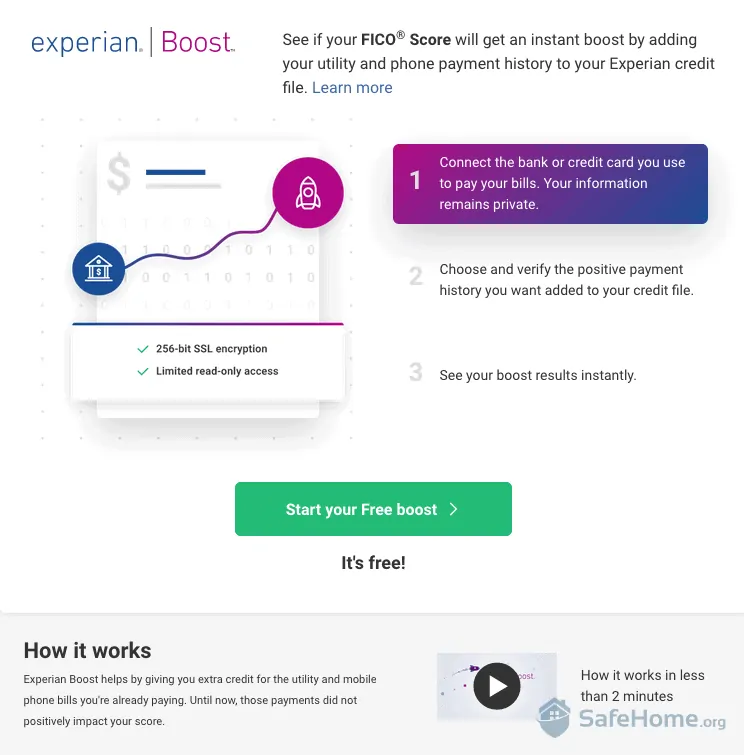
Experian Boost lets you link your bank account and earn credit for paying your bills—like your phone plan or Netflix—on time. It’s especially helpful if you’re just starting out and don’t have a traditional credit card or loan yet.
So, is it worth it?
They use encrypted, bank-level security.
It’s read-only access, meaning they can view your transactions but can’t move money.
You can disconnect your account anytime.
That said, if you’re super protective about who sees your bank info, you might not love the idea. But if you’re struggling to build credit, it’s a legit shortcut—and far safer than predatory lending or endless denials.
If Boost feels like too much, there’s another solid option: you could opt for a secured credit card to build credit, like Step. These work by using your own money as a deposit, so you’re not borrowing from a bank—you’re basically building credit by spending your own money, safely. And because secured cards report to the credit bureaus, they can help you grow your score over time, just like a regular credit card. It’s a low-risk way to get started without linking your bank or relying on someone else’s approval.
Is Experian Really Free? What You’re Signing Up For
Yes, but with limits.
You can:
Check your credit report and score for free
Get some basic credit alerts
Use Experian Boost at no cost
But there are premium features like identity theft protection, daily score updates, and advanced monitoring that cost extra. Just avoid accidentally enrolling in a free trial if you don’t want surprise charges.
How Your Experian Credit Report Helps You (or Not)
Your credit report isn’t just a number—it’s a detailed timeline of how you’ve handled money. Knowing what’s in it can help you:
Catch fraud
Fix errors that are hurting your score
Understand what lenders see before you apply
What’s Actually on an Experian Credit Report?
Your name, address, and employer history
Credit cards and loans (open and closed)
Missed or late payments
Public records like bankruptcies
Credit inquiries from lenders
It’s smart to review this regularly—especially before applying for something like an apartment or car loan.
FAQs About Experian
Does checking your score with Experian lower it?
Nope. That’s a soft inquiry—it doesn’t affect your score.
What is Experian’s credit score range?
Typically 300–850. A good score starts around 670.
Does your income affect your credit score?
No. Lenders care about income, but credit bureaus don’t track it.
Alternatives to Experian for First-Time Credit Builders
If Experian feels a little too complex, there are beginner-friendly options like Step.
Step is a credit building app designed for people 13+. There’s no credit check to sign up, and it helps you build credit with everyday purchases—like food, rides, or bills—through a secured card that reports to major credit bureaus.
It’s simple, transparent, and designed specifically for people figuring credit out for the first time.